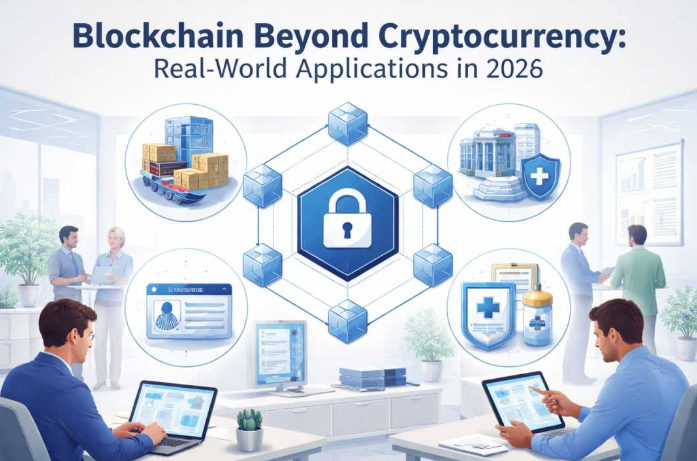
Introduction to Blockchain Beyond Crypto
What Is Blockchain Technology?
Blockchain is a distributed digital ledger that records transactions across multiple computers in a secure and immutable way. Each block contains data, a timestamp, and a cryptographic link to the previous block, forming a chain that cannot be easily altered. This structure ensures transparency and accountability, making blockchain highly reliable for storing sensitive information.
Why Blockchain Is More Than Cryptocurrency
Cryptocurrency was the first major application of blockchain, but it is only one use case among many. Today, organizations use blockchain to manage data, automate processes, and build trust in systems where intermediaries were once necessary. This shift highlights the technology’s broader value beyond digital money.
Evolution of Blockchain Use Cases
Over the years, blockchain has evolved from powering cryptocurrencies to supporting enterprise solutions. Early adopters focused on finance, but modern implementations now span supply chains, healthcare, and governance. This evolution demonstrates how blockchain continues to adapt to new challenges and opportunities.
Key Benefits Driving Blockchain Adoption
Decentralization and Transparency
One of blockchain’s most important features is decentralization. Instead of relying on a central authority, data is distributed across a network, making it transparent and resistant to manipulation. Users can verify transactions independently, which increases trust.
Enhanced Security and Data Integrity
Blockchain uses advanced cryptography to secure information. Once data is recorded, it cannot be changed without consensus from the network, ensuring integrity.
Cost Reduction and Efficiency
By removing intermediaries and automating processes through smart contracts, blockchain reduces operational costs. Transactions become faster and more efficient, especially in complex systems involving multiple parties.
Trust Without Intermediaries
Blockchain enables trust between parties who may not know each other. Because all transactions are recorded and verifiable, there is less need for third-party oversight, simplifying processes and reducing delays.
Blockchain in Supply Chain Management
Improving Traceability and Transparency
Blockchain allows companies to track products from origin to destination. Every step is recorded on a shared ledger, improving visibility and accountability across the supply chain.
Reducing Fraud and Counterfeiting
By providing a tamper-proof record of transactions, blockchain helps prevent fraud and counterfeit goods. Businesses and consumers can verify authenticity with confidence.
Real-World Examples in Logistics
Major logistics companies use blockchain to streamline operations and reduce paperwork. These systems improve coordination between suppliers, manufacturers, and distributors, leading to faster deliveries.
Blockchain in Healthcare
Secure Patient Data Management
Blockchain enables secure storage of patient records, giving individuals control over their data while ensuring privacy. Authorized providers can access accurate information when needed.
Interoperability Between Healthcare Systems
Different healthcare systems often struggle to share data. Blockchain creates a unified framework that allows seamless data exchange without compromising security.
Drug Traceability and Anti-Counterfeiting
Blockchain helps track pharmaceuticals throughout the supply chain, reducing the risk of counterfeit drugs and ensuring patient safety.
Blockchain in Finance Beyond Crypto
Smart Contracts in Banking
Smart contracts automatically execute agreements when conditions are met, reducing the need for manual processing and minimizing errors.
Cross-Border Payments
Blockchain simplifies international transactions by reducing fees and processing times.
Fraud Prevention and Compliance
Financial institutions use blockchain to monitor transactions in real time, improving compliance and detecting suspicious activities quickly. This strengthens overall financial security and trust.
Blockchain in Digital Identity Verification
Self-Sovereign Identity
Self-sovereign identity is one of the most promising applications of blockchain technology. It allows individuals to own, control, and manage their personal data without relying on centralized authorities. Instead of storing identity details on a single server, blockchain distributes encrypted data across a network, giving users full authority over who can access their information. This reduces dependency on third parties and empowers individuals with privacy and control.
Reducing Identity Theft
Identity theft is a growing concern in the digital world, but blockchain offers a strong solution. Because data stored on a blockchain is immutable and secured with cryptography, it becomes extremely difficult for hackers to alter or steal personal information. Each transaction or access request is recorded, creating a transparent trail that can be audited anytime. This level of security significantly lowers the risk of fraud and unauthorized access.
Applications in Government Services
Governments are exploring blockchain for digital identity systems such as national IDs, passports, and voter registration. Blockchain-based identity verification can streamline administrative processes, reduce paperwork, and improve service delivery. Citizens can access public services more efficiently while governments benefit from enhanced transparency and reduced fraud in identity management systems.
Challenges and Limitations of Blockchain
Scalability Issues
Despite its advantages, blockchain faces scalability challenges. As the number of users and transactions increases, the network can become slower and less efficient. Public blockchains, in particular, struggle to handle large volumes of data quickly. Developers are working on solutions like layer two protocols and improved consensus mechanisms, but scalability remains a key concern in 2026.
Regulatory Concerns
Blockchain operates across borders, which makes regulation complex. Governments and regulatory bodies are still developing frameworks to manage their use. Issues such as data privacy, legal recognition, and compliance create uncertainty for businesses adopting blockchain. Clear and consistent regulations are necessary to ensure widespread adoption and trust.
High Implementation Costs
Implementing blockchain solutions can be expensive, especially for small and medium-sized businesses. Costs include infrastructure development, skilled professionals, and ongoing maintenance. While long-term benefits may outweigh these expenses, the initial investment can be a barrier for many organizations considering adoption.
Energy Consumption
Some blockchain networks, particularly those using proof-of-work mechanisms, consume significant amounts of energy. This raises environmental concerns and limits sustainability. However, newer consensus models like proof-of-stake are being developed to reduce energy usage and make blockchain more eco-friendly.
Future Trends of Blockchain in 2026 and Beyond
Integration with AI and IoT
Blockchain is increasingly being integrated with artificial intelligence and the Internet of Things. This combination enhances data security, automation, and decision-making. For example, IoT devices can securely share data on a blockchain, while AI analyzes that data for insights. Together, these technologies create smarter and more efficient systems across industries.
Enterprise Adoption Growth
More businesses are recognizing the value of blockchain for improving operations and reducing costs. Enterprises are adopting private and hybrid blockchain solutions to enhance transparency and streamline workflows. This trend is expected to accelerate as technology becomes more accessible and scalable.
Government and Public Sector Use
Governments worldwide are expanding their use of blockchain for public services. From land records to tax systems, blockchain improves transparency and reduces corruption. Public sector adoption will play a crucial role in building trust and encouraging wider acceptance of the technology.
The Rise of Web3 Ecosystems
Web3 represents the next phase of the internet, where users have more control over their data and digital interactions. Blockchain is the backbone of this decentralized ecosystem, enabling peer-to-peer transactions and digital ownership. As Web3 grows, it will reshape how people interact online, offering more privacy and freedom.
Frequently Asked Questions (FAQs)
What are real-world uses of blockchain besides cryptocurrency?
Blockchain is used in supply chains, healthcare, digital identity, voting systems, and finance. It helps improve transparency, security, and efficiency in various industries beyond digital currencies.
Is blockchain secure for sensitive data?
Yes, blockchain is highly secure due to its decentralized structure and cryptographic protection. Once data is recorded, it cannot be easily altered, making it reliable for sensitive information.
How is blockchain used in healthcare and supply chains?
In healthcare, blockchain secures patient data and improves data sharing between systems. In supply chains, it tracks products, ensures authenticity, and enhances transparency from origin to delivery.
What industries benefit the most from blockchain in 2026?
Industries such as finance, healthcare, logistics, government, and real estate benefit significantly from blockchain due to its ability to improve efficiency and reduce fraud.
What is the future of blockchain technology?
The future of blockchain lies in integration with emerging technologies, increased enterprise adoption, and the growth of decentralized systems like Web3.
Conclusion
Blockchain technology has evolved far beyond cryptocurrency and is now shaping the future of multiple industries. From digital identity verification to enterprise solutions, its impact continues to expand in 2026. While challenges such as scalability, regulation, and costs still exist, ongoing innovation is addressing these issues. As adoption grows and new use cases emerge, blockchain is set to become a fundamental part of the global digital infrastructure, driving transparency, security, and efficiency across systems worldwide.