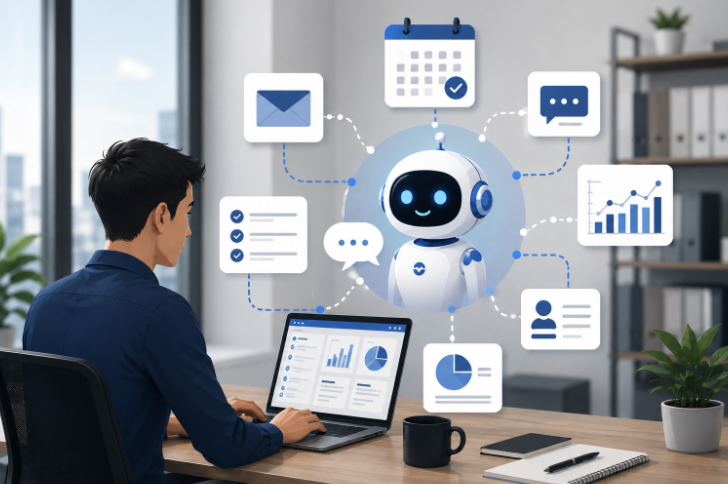
Artificial intelligence has rapidly evolved from a futuristic concept into a practical business tool. Today, companies of all sizes are integrating AI assistants into their daily operations to improve efficiency, reduce costs, and enhance productivity. From managing customer inquiries to organizing internal workflows, AI assistants are becoming essential components of modern business environments.
What Are AI Assistants?
AI assistants are software applications powered by artificial intelligence technologies such as natural language processing, machine learning, and automation. They can understand user requests, process information, and perform tasks with minimal human intervention. Popular examples include virtual customer support agents, scheduling assistants, and AI-powered content generation tools.
Unlike traditional software, AI assistants can learn from interactions and continuously improve their performance. This allows businesses to automate complex tasks while maintaining accuracy and consistency.
Why Businesses Are Adopting AI Technology
Businesses are adopting AI assistants because they help streamline operations and improve overall performance. Organizations can automate repetitive tasks, reduce manual workloads, and enable employees to focus on higher-value activities. As competition increases across industries, companies are looking for ways to operate more efficiently while delivering better customer experiences.
The growing accessibility of AI tools has also made implementation easier and more affordable, encouraging businesses of all sizes to embrace AI-driven solutions.
Automating Repetitive Administrative Tasks
One of the most significant benefits of AI assistants is their ability to handle repetitive administrative work. Many business processes involve routine tasks that consume valuable time and resources. AI automation helps eliminate these inefficiencies.
Managing Emails and Schedules Efficiently
AI assistants can organize emails, prioritize important messages, schedule meetings, and send reminders automatically. Instead of spending hours managing calendars and inboxes, employees can rely on AI tools to handle these responsibilities efficiently.
This automation reduces scheduling conflicts, improves communication, and allows teams to focus on strategic business objectives rather than routine administrative duties.
Reducing Manual Data Entry Work
Data entry is often time-consuming and prone to human error. AI assistants can collect, process, and update information across multiple systems automatically. This improves data accuracy while significantly reducing the workload associated with manual record management.
Businesses that automate data entry processes often experience faster operations and improved decision-making due to more reliable information.
Enhancing Customer Support and Communication
Customer service is one of the areas where AI assistants have made the greatest impact. Businesses can now provide faster and more consistent support without increasing operational costs.
Providing 24/7 Customer Assistance
AI-powered chatbots and virtual assistants can respond to customer inquiries around the clock. Unlike human support teams that operate within specific working hours, AI assistants remain available at all times.
This continuous availability helps businesses serve customers across different time zones while ensuring that common questions receive immediate responses.
Improving Response Times and Customer Satisfaction
Customers expect quick and accurate answers. AI assistants can instantly access information and provide solutions within seconds. Faster response times lead to better customer experiences and increased satisfaction levels.
Improving Team Productivity and Collaboration
AI assistants are transforming the way teams work together by simplifying communication and task management processes.
Streamlining Internal Communication
Many organizations use AI assistants to facilitate communication between departments. AI tools can summarize meetings, generate reports, organize conversations, and distribute important updates automatically.
This ensures that team members remain informed and aligned without spending excessive time searching for information.
Supporting Project and Task Management
Project management often involves coordinating deadlines, assigning responsibilities, and tracking progress. AI assistants can automate many of these tasks by sending reminders, monitoring milestones, and generating performance reports.
As a result, teams can maintain better organization and productivity while reducing the likelihood of missed deadlines.
AI Assistants in Sales and Marketing Operations
Sales and marketing teams are increasingly leveraging AI assistants to improve customer engagement and drive business growth.
Generating Leads and Customer Insights
AI tools can analyze customer behavior, identify buying patterns, and generate valuable insights for sales teams. By examining large amounts of data, AI assistants help businesses discover potential leads and target audiences more effectively.
These insights allow organizations to focus their efforts on prospects that are most likely to convert into customers.
Personalizing Marketing Campaigns
Modern consumers expect personalized experiences. AI assistants can analyze user preferences and create tailored marketing messages based on individual interests and behaviors.
Personalized campaigns often result in higher engagement rates, improved customer relationships, and increased conversion opportunities. Businesses can deliver relevant content at the right time, maximizing the effectiveness of their marketing efforts.
Data Analysis and Smarter Decision-Making
Data has become one of the most valuable business assets, but extracting meaningful insights from large datasets can be challenging. AI assistants simplify this process by transforming raw information into actionable intelligence.
Turning Business Data Into Actionable Insights
AI systems can process vast amounts of information in a fraction of the time required by human analysts. They identify trends, patterns, and anomalies that may otherwise go unnoticed.
These insights help business leaders make informed decisions based on accurate and timely information rather than assumptions.
Predicting Trends and Business Opportunities
Predictive analytics is one of the most powerful capabilities of modern AI assistants. By analyzing historical data and market patterns, AI can forecast future trends and identify emerging opportunities.
Businesses that leverage predictive insights can adapt more quickly to changing market conditions, improve strategic planning, and gain a competitive advantage in their industries.
Reducing Operational Costs With AI
Cost reduction is a major reason businesses invest in AI assistants. By automating routine processes and improving efficiency, organizations can lower expenses while maintaining high performance levels.
Minimizing Human Errors
Human mistakes can lead to financial losses, operational delays, and customer dissatisfaction. AI assistants help reduce these risks by performing tasks with a high level of accuracy and consistency.
Whether processing invoices, managing customer records, or analyzing data, AI systems can follow predefined rules without fatigue or distraction. This reliability helps businesses improve operational quality and avoid costly errors.
Optimizing Resource Allocation
AI assistants can analyze workloads, identify inefficiencies, and recommend better ways to allocate resources. Businesses can use these insights to optimize staffing, manage budgets, and improve overall productivity.
By ensuring that resources are used effectively, organizations can maximize returns while reducing unnecessary expenditures.
AI Assistants for Remote and Hybrid Work Environments
The rise of remote and hybrid work models has increased the demand for digital collaboration tools. AI assistants play a critical role in helping distributed teams stay connected and productive.
Supporting Distributed Teams
Remote teams often face challenges related to communication, coordination, and information sharing. AI assistants can bridge these gaps by organizing workflows, scheduling meetings, and ensuring that team members have access to relevant information.
This support helps maintain operational efficiency regardless of where employees are located.
Improving Virtual Collaboration
AI-powered collaboration tools can generate meeting summaries, transcribe discussions, and highlight important action items. These capabilities help teams stay aligned and ensure that critical information is not overlooked.
As remote work continues to evolve, AI assistants will remain valuable tools for improving collaboration across geographically dispersed teams.
Common Challenges of AI Adoption
Although AI assistants offer numerous advantages, businesses may encounter challenges during implementation. Understanding these obstacles can help organizations prepare for a smoother transition.
Data Privacy and Security Concerns
AI systems often process large amounts of business and customer data. As a result, organizations must prioritize data security and compliance with privacy regulations.
Businesses should establish strong security measures, implement access controls, and ensure that AI vendors follow industry best practices for protecting sensitive information.
Employee Training and Change Management
Introducing AI tools can create uncertainty among employees who may be unfamiliar with new technologies. Successful adoption requires proper training and clear communication about how AI will support rather than replace human workers.
Organizations that invest in employee education and change management initiatives are more likely to achieve positive outcomes from their AI implementations.
Best Practices for Implementing AI Assistants
A thoughtful implementation strategy is essential for maximizing the benefits of AI assistants. Businesses should focus on aligning technology investments with operational goals.
Choosing the Right AI Solution
Some specialize in customer support, while others focus on workflow automation, data analysis, or content creation.
Before selecting a solution, businesses should evaluate their needs, objectives, and existing processes. Choosing the right tool increases the likelihood of achieving meaningful results.
Setting Clear Business Objectives
Organizations should define measurable goals before implementing AI technology. These objectives may include reducing response times, improving customer satisfaction, increasing productivity, or lowering operational costs.
Clear goals make it easier to track performance and evaluate the success of AI initiatives over time.
Future Trends in AI-Powered Business Operations
The capabilities of AI assistants continue to expand as technology advances. Businesses that stay informed about emerging trends will be better positioned to capitalize on future opportunities.
Advanced Automation Capabilities
Future AI assistants will handle increasingly complex tasks, including multi-step workflows, advanced problem-solving, and cross-department coordination. These developments will enable businesses to automate larger portions of their operations.
As AI technology becomes more sophisticated, organizations can expect even greater efficiency gains and productivity improvements.
The Growing Role of Generative AI
Generative AI is transforming how businesses create content, communicate with customers, and develop innovative solutions. From writing reports and marketing materials to generating ideas and assisting with research, generative AI is becoming an important business asset.
Companies that effectively integrate generative AI into their operations will gain new opportunities to enhance creativity, efficiency, and customer engagement.
Conclusion
AI assistants are reshaping daily business operations by automating repetitive tasks, improving customer service, enhancing productivity, and supporting smarter decision-making. Their ability to process information quickly and accurately makes them valuable tools for organizations seeking to remain competitive in an increasingly digital marketplace.
Key Takeaways for Businesses
AI assistants help streamline workflows, reduce operational costs, improve customer experiences, and provide valuable insights for strategic decision-making. Businesses that adopt AI thoughtfully can achieve significant efficiency and performance improvements.
Preparing for an AI-Driven Future
Organizations that embrace innovation, invest in employee training, and implement AI strategically will be better prepared for future challenges and opportunities. By leveraging AI assistants effectively, businesses can build more agile, efficient, and competitive operations in the years ahead.