For decades, certain ateliers built their creative rhythm around access. Designers knew what was possible because supply, while limited, still existed. Once that certainty vanished, the entire logic of creation shifted. Sketches became more restrained. Concepts leaned toward permanence rather than novelty. Pieces were designed not for seasonal relevance but for historical placement. This is the point where high jewellery stops behaving like fashion and starts behaving like cultural preservation.
One of the first responses was internal recalibration. Houses reviewed what they already held. Stones once considered “too special” to use were brought back into conversation. Creative teams asked harder questions. Does this piece deserve to exist now, or should it wait? Is this design worthy of a material that cannot be replaced? These were not marketing questions. They were ethical ones, asked quietly behind closed doors.
Design language changed as well. Before scarcity became absolute, colour might have been used to create contrast or drama. After supply ended, colour became the centre of the story. Designs simplified. Settings became cleaner. Metalwork stepped back. The goal was not to show complexity, but restraint. The material itself became the message.
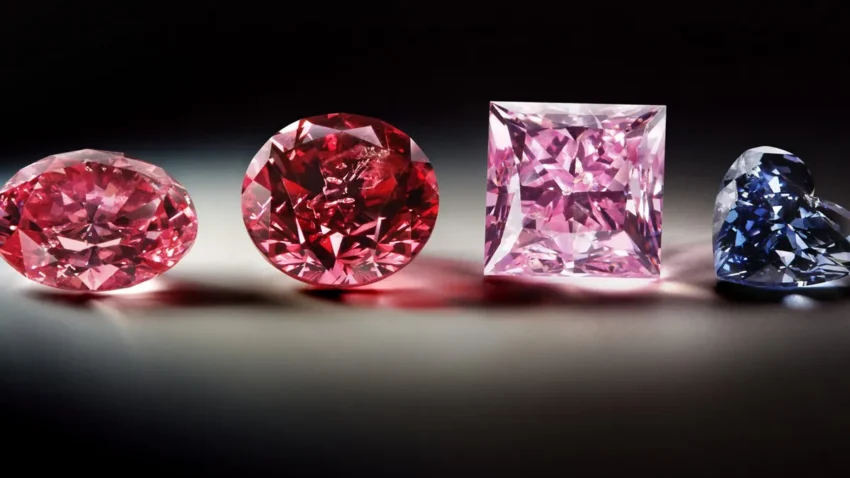
This shift is particularly visible in how houses treat provenance. Origin moved from footnote to headline. Where something came from began to matter as much as how it looked. Collectors did not just want beauty. They wanted context, traceability, and a clear line back to a place and moment that no longer exists. In this environment, Argyle Pink Diamonds became a reference point for conversations about finality and legacy, even when they were not the direct subject of a piece.
Another response was a change in release strategy. High jewellery houses became more selective about when and how pieces entered the market. Some designs were withheld entirely. Others were released quietly to known collectors rather than showcased publicly. This was not secrecy for the sake of mystique. It was an acknowledgement that once something is sold, it may never return to the market again.
Pricing behaviour also evolved. Instead of following traditional valuation models, houses began pricing with future absence in mind. The question was no longer what a piece was worth today, but what it would represent in ten or twenty years. This long view aligned more closely with collectors who were thinking in generational terms. Jewellery stopped being an acquisition and became an inheritance.
Interestingly, the disappearance of a core material also affected collaboration. Designers worked more closely with gem specialists and historians. Decisions were supported by research rather than instinct alone. When supply is finite, mistakes feel heavier. Every setting becomes permanent. Every cut carries consequence.
Marketing language shifted too. Campaigns moved away from excess and toward meaning. Words like “rare” were used less frequently, not more. Overuse felt inappropriate. Instead, houses spoke about stewardship, care, and responsibility. Ownership was framed as temporary guardianship rather than possession.
There was also a noticeable emotional response within ateliers. Craftspeople who had worked with the material for years understood what had been lost. Their knowledge became finite too. Techniques passed down through practice could no longer be repeated indefinitely. This created a quiet urgency to document, teach, and preserve skills while they still could.
Collectors felt this shift immediately. Pieces connected to a closed source began leaving the market. Once acquired, they stayed put. Auction appearances became rarer. When they did happen, bidding behaviour changed. Buyers were not competing for aesthetics alone. They were competing for a piece of history that could not be recreated.
In this environment, Argyle Pink Diamonds are often referenced as an example of how a single origin can influence global design thinking long after production ends. Their impact is felt not through volume, but through absence. They remind the industry that luxury is not defined by abundance, but by limits.