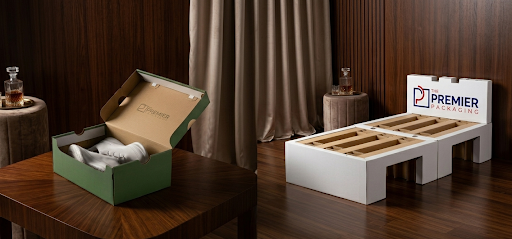
The Olympic Games are the focus of the global community every four years, which is amazed by all kinds of performances by athletes and emotional moments during the award of medals and the demonstration of the local culture of the host city. However, in 2020 (which took place in 2021 because of the pandemic) and in 2024, something unexpected emerged as a theme of conversation around the world: cardboard beds. The moment athletes came to the Tokyo Olympic Village, they found their beds made of almost 100 percent heavy-duty recycled cardboard. The world responded with curiosity, skepticism and ultimately, admiration. Jumping to the Olympics 2024 in Paris, the cardboard beds re-emerged, only with a different design and yet a strong message about sustainability.
But this is the interesting inquiry which few individuals have put, where did this idea come? It is not in the design of furniture that the answer, but in the simple world of packaging. It is in fact a trip to corrugated boxes and the Olympic innovation from Tokyo to Paris. We will see how one of the most discussed trends in the contemporary history of the Olympics was inspired by packaging.
The Origin Story: Packaging as the Silent Teacher
The concept of using cardboard for structural purposes is not new to packaging engineers. The shipping and logistics industry has used corrugated cardboard to secure heavy products- refrigerators to pianos- over decades. The trick is the middle layer of the corrugated board is fluted to form unbelievable strength yet low weight. The same principle is employed to transport thousands of products every day worldwide.
The committee in charge of the Tokyo Olympic Games chose to be inspired by a rather unexpected model: the packaging industry, when they said they wanted the most sustainable Games in history. In particular, they examined the way e-commerce giants are able to deliver bulky electronics with the use of cardboard alone and reinforced corners. Since the cardboard can take the weight of a 50-pound television in cross country shipping, why not a 250-pound athlete lying asleep?
This led to the current-day popular Tokyo cardboard bed frame, which was developed by Airwave of Japan. The beds were recycled cardboard, had a capacity of up to 440 pounds and were completely recyclable at the conclusion of the Games. The world was amazed as the athletes sprung on their beds to demonstrate that they would not fall. There was a viral sensation among packaging solutions.
The Paris Upgrade: Learning from Tokyo
In the case of the Paris 2024 Olympics, the cardboard bed was brought back, but not as a direct duplicate. The Paris organizational committee analyzed the performance of Tokyo and what they could have done better. The new beds consisted of:
- Cardboard pieces that could be re-assembled to fit the height of the athlete.
- Better load distribution with enhanced corrugated engineering.
- Fishing net mattress bases (another innovation) are made of recycled fishing nets.
- Bed frames fully recycled that would be repackaged into new packaging after the Games.
The Paris beds were more light, powerful and easier to assemble compared to the Tokyo predecessors. Here, again, were the principles of structural engineering, lightweight durability and end-of-life recyclability of the packaging industry.
When you received a pair of pricey sneakers in the mail, you have already tried a sample of the cardboard bed engineering that goes into Olympic cardboard. Consider Cardboard Shoe packaging, they are not frail or weak. A properly designed Cardboard Shoe Box is constructed of double-wall corrugated board, reinforced corners and interlocking flaps that provides protection to heavy footwear in harsh shipping environments. The same can be said about Olympic beds: corrugated flutes dissipate shock, layered walls distribute the weight evenly and the box construction is made strong by ingeniously designed folding patterns. Indeed, the Tokyo and Paris bed frames are merely enlarged, flattened, Cardboard Shoe Boxes on their sides and piled up. Only the scale is different. This is the reason why packaging engineers were smiling inside when the cardboard bed trend was viral- it has been decades they have been making beds of shoes, electronics, and machinery. The Olympic Village just provided the world with an opportunity to experience the potential of packaging that remains hidden.
Why This Trend Matters for 2026 and Beyond
The cardboard bed is not a weird Olympic frivolity. It is a colossal change in the way industries consider materials. This is why this trend continues to increase in 2026:
1. Sustainability No Longer an Option
Both consumers and corporations are seeking solutions to a circular economy. Cardboard is recyclable, biodegradable and renewable. The Olympic cardboard beds demonstrated that temporary buildings, such as event furnishings, trade show booths, and pop-up shop fittings, do not have to be made out of virgin plastic or metal. The work can be done with packaging-grade cardboard that can then be recycled.
2. Lightweight Logistics Save Money and Carbon
It is costly and eco-unfriendly to move big steel bed frames around the globe. The cardboard bed frames are lightweight, flat packed and can be locally manufactured using recycled materials. The furniture industry is also undergoing the same process, as such companies as Kartell and IKEA are playing with cardboard designs.
3. Cardboard as Furniture Aesthetic Viral
Social media played a huge role in the cardboard bed trend. Videos of sportspeople testing the strength of the beds, putting them together in a few seconds, and playing with the idea of cardboard romance brought in billions of views. This natural interest rendered sustainability a fun, not a preachy proposition. This is the copying playbook which brands are following in 2026: cardboard packaging doubling as display furniture, event seating, or temporary structures all meant to be filmed and shared.
Beyond Beds: The way that packaging is inspiring other industries.
The introduction of successful Olympic cardboard beds has given the packaging innovations in various industries openings:
- Retail Displays: Retailers have adopted cardboard stores that resemble wood or metal fixtures, made of corrugated cardboard that recycle immediately and which cost 80 less.
- Event Furniture: Cardboard chairs, tables and bars are used in weddings, concerts and festivals with brand logos printed on them and composted after use.
- Disaster Relief: Humanitarian agencies deliver cardboard-based shelters in flat-packs that can be assembled to form beds, tables, and storage units as emergency housing.
- E-commerce Packaging: Companies are creating boxes which turn into product stands, pet houses, or children toys once they are delivered- extending the life of the packaging.
The DNA of all these innovations is the same: the art of the packaging industry, corrugated cardboard.
Tokyo to Paris to Your Home
The cardboard bed story is eventually a tale of viewing old stuff differently. Packaging has been recyclable, lightweight and strong. However, we discarded it carelessly over the decades. That perception was changed with the Tokyo and Paris Olympics. They demonstrated to millions of people that a cardboard box, or a Cardboard Shoe Box, or bed frame, is more than a container. It is a structural system, design challenge and sustainability solution combined.
Look forward to a further appearance of more products inspired by packaging as we head further into 2026. Your next chair will come in a box as a flat pack. Recycled corrugated can be used to make your next table. And your second pair of shoes? They will be in a Cardboard Shoe Box, strong enough to sleep in–if you should ever have to.
Conclusion
It was not merely the trip between Tokyo and Paris where the athletes can run faster or jump higher. It was a silent revolution in material thinking. Olympic cardboard beds demonstrated that cardboard that is used in packaging can be beautiful, functional and sustainable. They demonstrated that an industry commonly perceived to be invisibly so, the packaging industry, can ignite change throughout the world. And The Premier packaging shows that the most creative ideas often come from the simplest places—a cardboard shoe box in your closet, just waiting to be seen for what it truly can be.