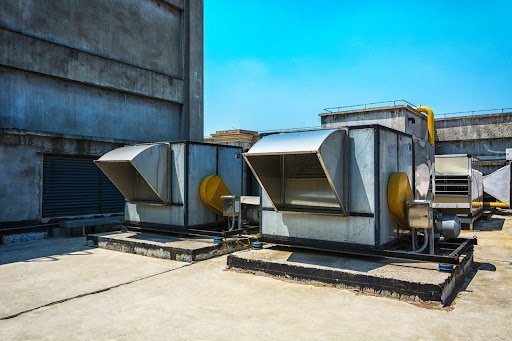
Commercial buildings today are no longer designed around space alone. They are engineered around performance, efficiency, occupant comfort, and operational resilience. Climate control and ventilation strategy now influence architectural layout, energy modeling, and lifecycle costing from the earliest planning stages. Air systems are no longer background utilities but core infrastructure.
From hospitals and airports to data centers and mixed-use towers, air movement architecture determines indoor quality and regulatory compliance. System designers increasingly collaborate with commercial air handling unit manufacturers to align airflow, filtration, and thermal control with building intent and usage density.
Why Air Processing Infrastructure Is Now a Core Design Layer
Modern commercial structures operate under tighter environmental tolerances than ever before. Occupancy density, equipment heat loads, and regulatory ventilation standards have increased baseline requirements. Air processing systems must therefore deliver precise temperature, humidity, and filtration control across variable operating conditions.
Designers now treat air infrastructure as an integrated building layer rather than a bolt-on service. Mechanical rooms, vertical shafts, and duct routing are modeled alongside structural and electrical systems. Early integration reduces inefficiencies and avoids spatial conflicts later in construction.
This shift also reflects stricter indoor air quality benchmarks across healthcare, hospitality, and institutional facilities. Air treatment performance now directly affects certification frameworks and operational approvals. That makes system selection a strategic decision rather than a procurement afterthought.
Performance Metrics That Drive System Selection
System evaluation today is based on measurable performance criteria rather than only tonnage or airflow capacity. Engineers examine thermal efficiency, static pressure behavior, filtration staging, and part load performance curves. Each metric affects operating cost and reliability across the building lifecycle.
Energy recovery capability has become especially important in large footprint facilities. Heat exchangers and recovery wheels reduce conditioning loads by reclaiming energy from exhaust air streams. This reduces overall plant demand and improves sustainability metrics.
Acoustic performance also plays a larger role in modern specifications. Noise control requirements are stricter in commercial interiors, especially offices, hotels, and healthcare environments. Equipment selection must therefore balance airflow output with sound attenuation features.
Understanding the Core Air Treatment Module
An air handling unit is the central module responsible for conditioning and distributing air within a building ventilation system. It combines filtration, heating or cooling coils, fans, and control dampers within a structured enclosure. The unit prepares air before it enters the distribution duct network.
These systems can be configured for fresh air intake, mixed air operation, or full recirculation depending on building use. Configuration choices affect energy load, filtration demands, and regulatory compliance. Specialized applications such as laboratories and clean spaces require custom internal arrangements.
Modern variants also integrate sensors and control interfaces for dynamic adjustment. Airflow and temperature output can be tuned in response to occupancy and load variation. This transforms the unit from static equipment into an adaptive system component.
Filtration Staging and Indoor Air Quality
Filtration stages are selected based on particulate load and indoor air quality targets. Pre-filters capture larger particles while fine filters remove smaller contaminants. Multi-stage configurations extend filter life and improve efficiency.
Higher-grade filtration is now common in healthcare and high-traffic facilities. Regulatory frameworks increasingly specify minimum efficiency ratings. This pushes designers to allocate additional space and pressure allowances.
Improved filtration also impacts fan sizing and energy consumption. Resistance increases with finer media, so airflow systems must compensate accordingly. That tradeoff must be modeled early in system design.
Coil Configuration and Thermal Exchange
Heating and cooling coils form the thermal exchange core inside air processing systems. Coil selection depends on load profile, fluid type, and control strategy. Chilled water, hot water, or refrigerant-based coils are used depending on plant design.
Coil face area and row depth influence heat transfer efficiency. Larger surfaces allow lower airside pressure drop at the same output. That improves fan efficiency and reduces operating cost.
Condensate management and corrosion resistance are also critical considerations. Poor drainage or material choice can degrade performance over time. Long-term durability is therefore part of the coil specification.
Fan Systems and Airflow Control
Fan assemblies determine airflow volume and pressure capability. Centrifugal and plug fan designs are widely used in commercial installations. Selection depends on duct resistance and required airflow stability.
Variable speed drives are now standard in most advanced systems. They allow dynamic adjustment based on load and occupancy patterns. This significantly reduces energy consumption during partial load operation.
Fan redundancy is often specified in mission-critical buildings. Parallel arrangements maintain airflow during maintenance or failure events. Reliability design is therefore built into airflow architecture.
Energy Efficiency and Sustainability Pressures
Energy performance regulations continue to tighten across regions. Commercial air systems are under scrutiny due to their large energy share. Efficiency improvements are therefore a design priority.
Heat recovery modules, variable airflow control, and advanced insulation reduce waste. Each incremental improvement compounds over long operating hours. Total lifecycle savings can be significant.
Sustainability frameworks now evaluate ventilation energy intensity. System design affects certification outcomes. Mechanical strategy, therefore, influences asset value.
Application Specific Design Variations
Different building types impose distinct air processing demands. Healthcare facilities require strict filtration and pressure control. Data centers prioritize heat removal and redundancy.
Hospitality environments emphasize acoustic comfort and humidity stability. Industrial sites may require contaminant control and ruggedized construction. One-size design approaches no longer work.
Customization is therefore common in modern projects. Modular construction allows configuration flexibility. Systems are adapted to application risk and load profile.
Final Thoughts on System Selection and Industry Capability
Modern commercial projects demand engineered air systems that balance efficiency, control, and durability. Specification decisions now consider lifecycle cost, automation compatibility, and performance under variable loads. Collaboration across design, engineering, and supply chains has become essential.
Organizations such as FJ Group operate across HVAC distribution, engineered equipment supply, and technical building solutions, supporting complex commercial and industrial projects across the region. Their ecosystem includes partnerships with global technology brands, technical integration capability, and sector-specific system support. When evaluating system partners and air handling unit solutions, decision makers increasingly prioritize technical depth, integration capability, and long-term service infrastructure over simple equipment sourcing.